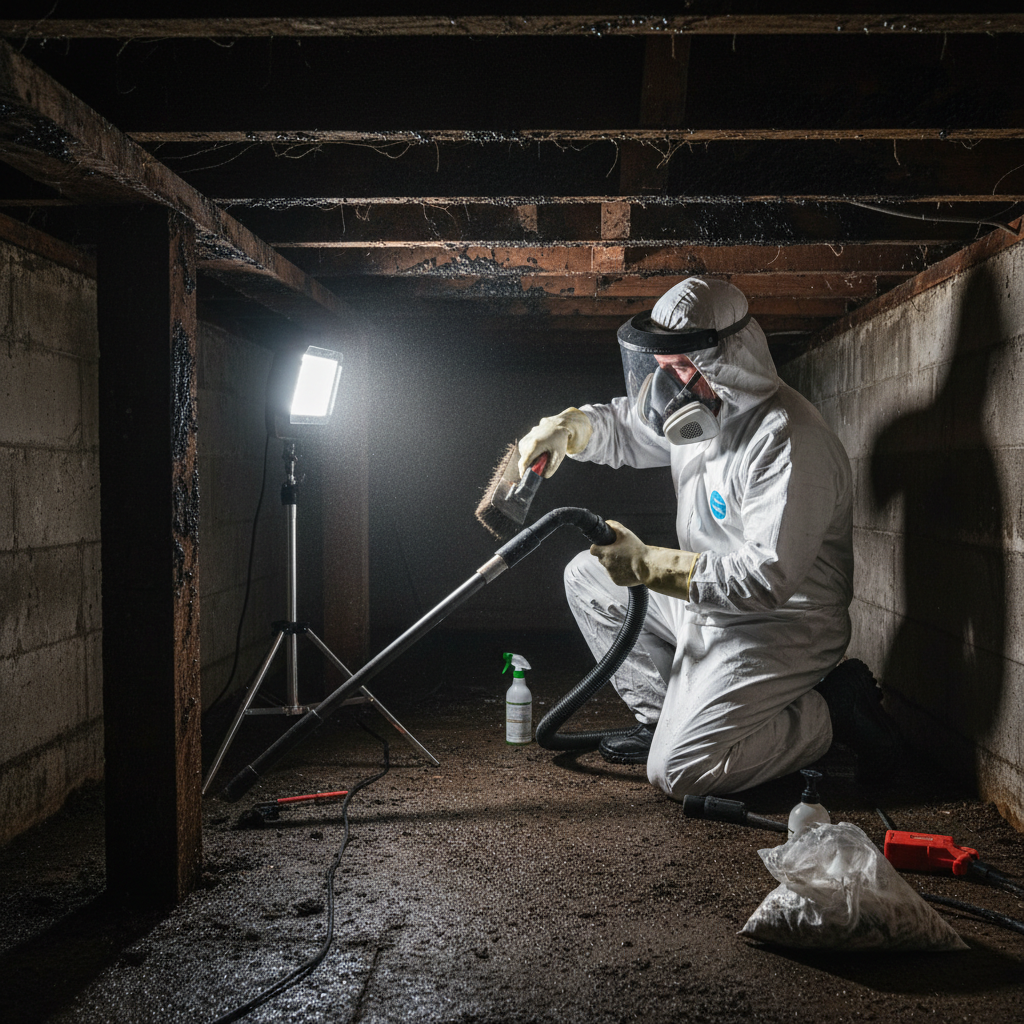
Signs You Have Black Mold in Your Crawlspace (And What to Do About It)
The Most Common Mold Problem We Find in Eastern NC Homes
If you live in Washington, Chocowinity, Belhaven, or anywhere else in the Eastern NC area, there's a good chance your home sits on a crawlspace. And if that crawlspace doesn't have a proper vapor barrier and adequate ventilation — or if it's ever had any moisture intrusion — there's a real possibility mold is growing under your feet right now.
We find crawlspace mold in homes that otherwise look perfectly clean and well-maintained. The problem is that most people never go down there — and the mold has no reason to stop growing until someone does.
Warning Signs to Watch For
1. A Musty Smell That You Can't Trace
If your home has a persistent earthy or musty odor — especially noticeable on the first floor or after rain — that's often mold in the crawlspace. The odor travels up through gaps in the flooring and HVAC system.
2. Allergy Symptoms That Won't Go Away
Unexplained sneezing, coughing, watery eyes, or worsening asthma — especially at home but not elsewhere — can point to elevated mold spore counts in your indoor air. Up to 50% of your home's air comes from the crawlspace.
3. Soft or Bouncy Floors
If your floors feel soft, springy, or uneven in certain spots, that can indicate that the floor joists in your crawlspace have been weakened by moisture and mold.
4. Higher-Than-Usual Humidity Inside
If you're running your AC but the inside of your home still feels humid, moisture from the crawlspace could be the culprit.
5. Visible Dark Spots on Wood in the Crawlspace
If you or a contractor has ever been under your house and noticed dark discoloration on the wood beams or joists, that almost certainly needs to be tested.
Why Eastern NC Is Especially Vulnerable
Beaufort County and the surrounding coastal plain are among the most humid areas of North Carolina. The ground under your home is constantly releasing moisture — and without a proper vapor barrier, that moisture has nowhere to go but up into the wood structure of your home. Hurricane season brings flooding. Winter rains saturate the soil. The conditions here are almost ideal for mold growth.
What We Do About It
When we find mold in a crawlspace, we don't just spray something on it and call it done. We:
- Remove and properly dispose of all moldy material
- Treat the wood structure with an EPA-registered antimicrobial
- Install a heavy-duty vapor barrier across the floor and up the walls
- Seal all vents, gaps, and penetrations
- Install a dehumidifier if needed to maintain safe humidity long-term
We're IICRC certified and work with all major insurance companies including State Farm, Farm Bureau, USAA, and Allstate.
Think you might have crawlspace mold? Give us a call at (252) 947-1847 — we offer free estimates and can usually get someone out quickly.